Graphs
A graph is a non-linear data structure that can be looked at as a collection of vertices (or nodes) potentially connected by line segments named edges.
some common terminology used when working with Graphs:
- Vertex : A vertex, also called a “node”, is a data object that can have zero or more adjacent vertices.
- Edge : An edge is a connection between two nodes.
- Neighbor : The neighbors of a node are its adjacent nodes, i.e., are connected via an edge. Degree - The degree of a vertex is the number of edges connected to that vertex.
Directed vs Undirected
Undirected Graphs
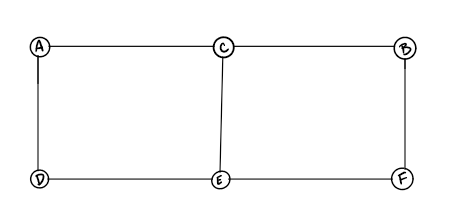
An Undirected Graph is a graph where each edge is undirected or bi-directional. This means that the undirected graph does not move in any direction.
-
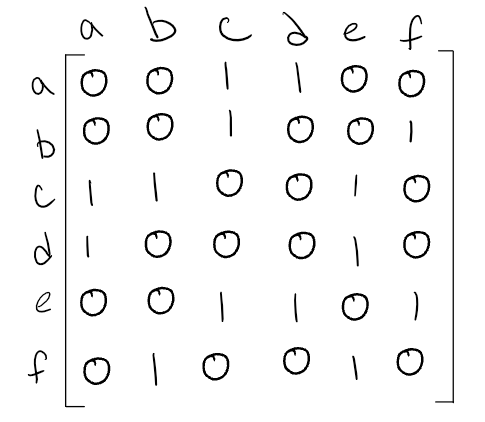
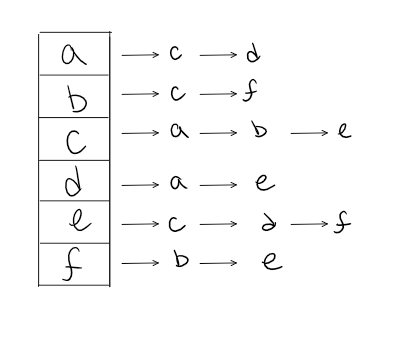
Vertices/Nodes = {a,b,c,d,e,f}
-
Edges = {(a,c),(a,d),(b,c),(b,f),(c,e),(d,e),(e,f)}
Directed Graphs (Digraph)
-
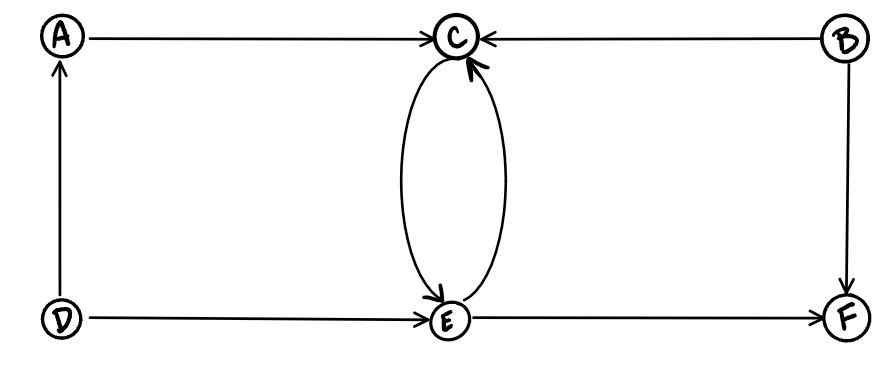
A Directed Graph also called a Digraph is a graph where every edge is directed.
-
Unlike an undirected graph, a Digraph has direction. Each node is directed at another node with a specific requirement of what node should be referenced next.
-
Vertices = {a,b,c,d,e,f}
-
Edges = {(a,c),(b,c),(b,f),(c,e),(d,a),(d,e)(e,c)(e,f)}
Complete vs Connected vs Disconnected
Complete Graphs
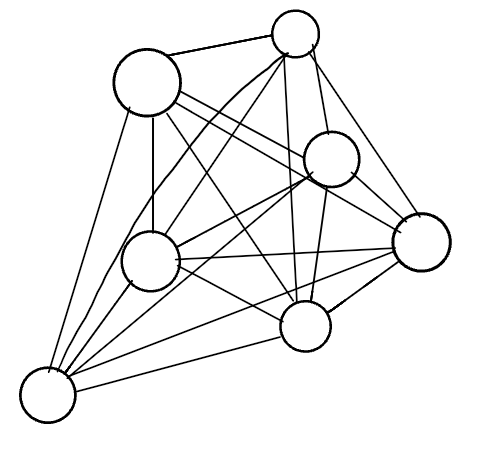
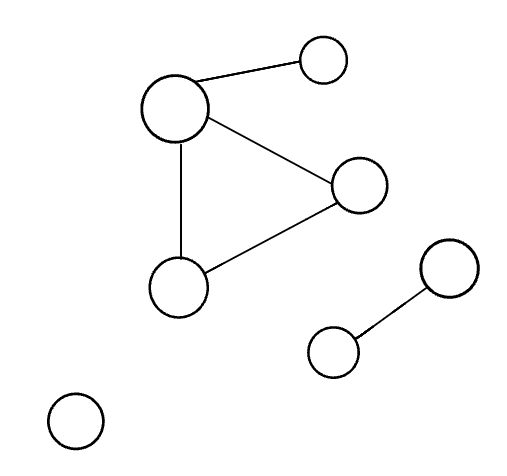
A complete graph is when all nodes are connected to all other nodes.
Connected
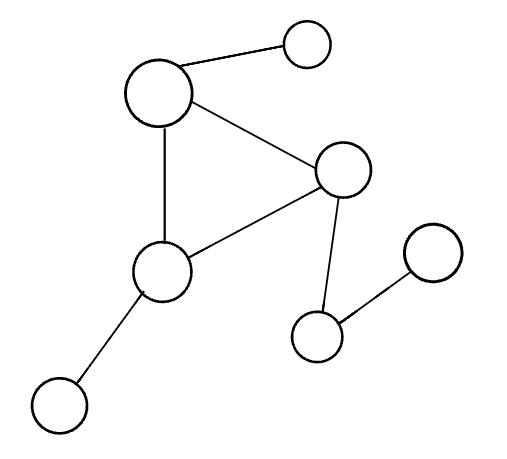
A connected graph is graph that has all of vertices/nodes have at least one edge
Disconnected
A disconnected graph is a graph where some vertices may not have edges.
Acyclic vs Cyclic
Acyclic Graph
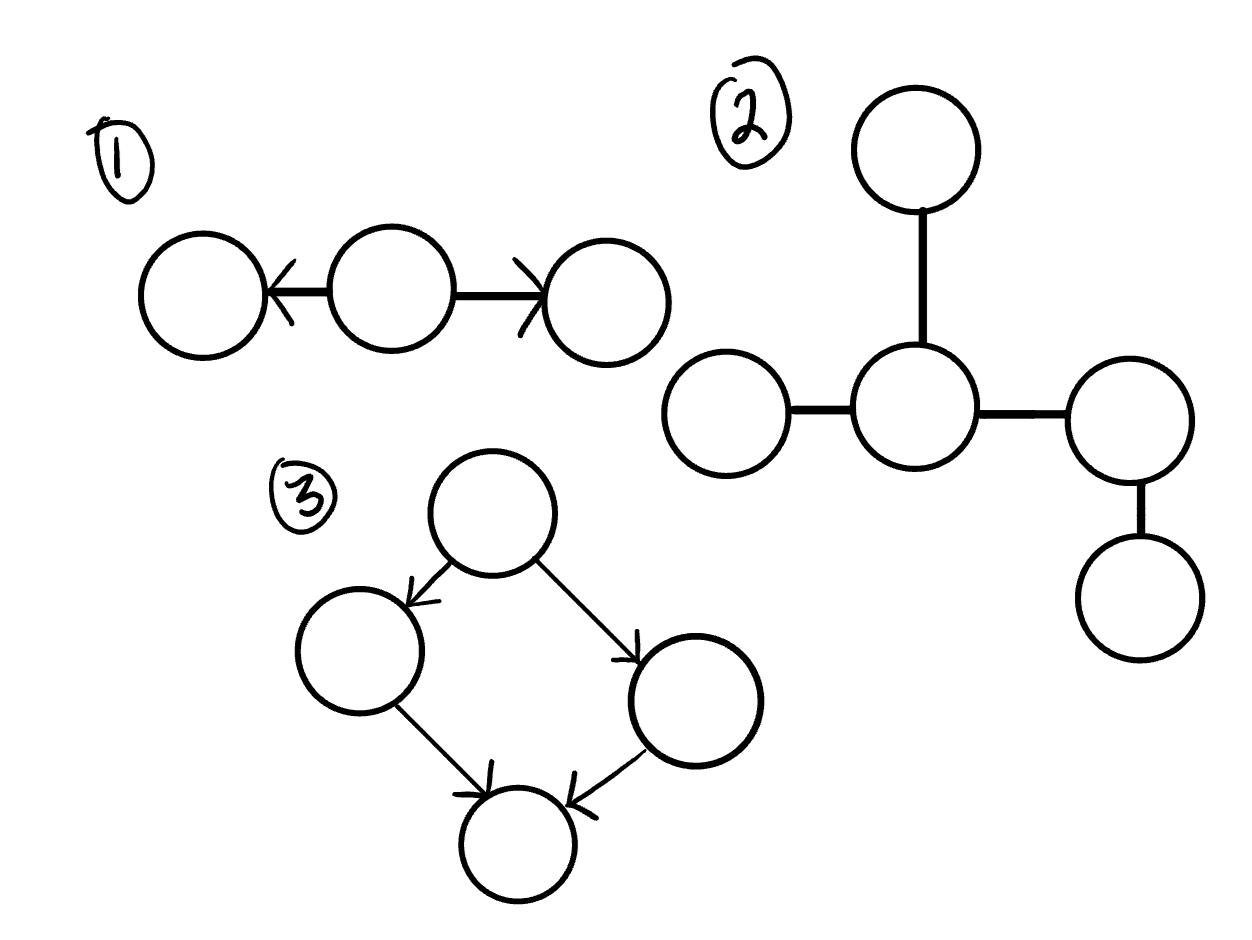
An acyclic graph is a directed graph without cycles.A cycle is when a node can be traversed through and potentially end up back at itself.
Cyclic Graphs
A Cyclic graph is a graph that has cycles. A cycle is defined as a path of a positive length that starts and ends at the same vertex.

Graph Representation
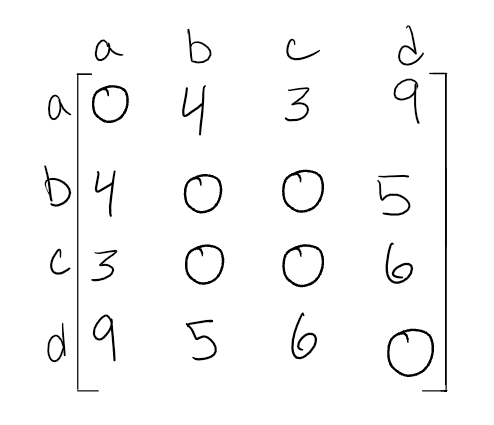
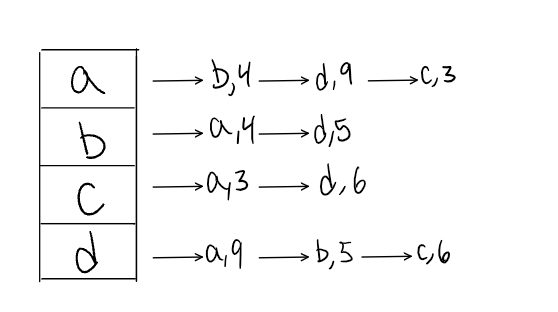
We represent graphs through:
- Adjacency Matrix
- Adjacency List
Weighted Graphs
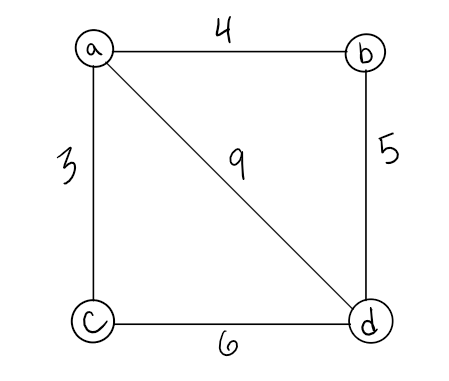
A weighted graph is a graph with numbers assigned to its edges. These numbers are called weights. This is what a weighted graph looks like
Traversals
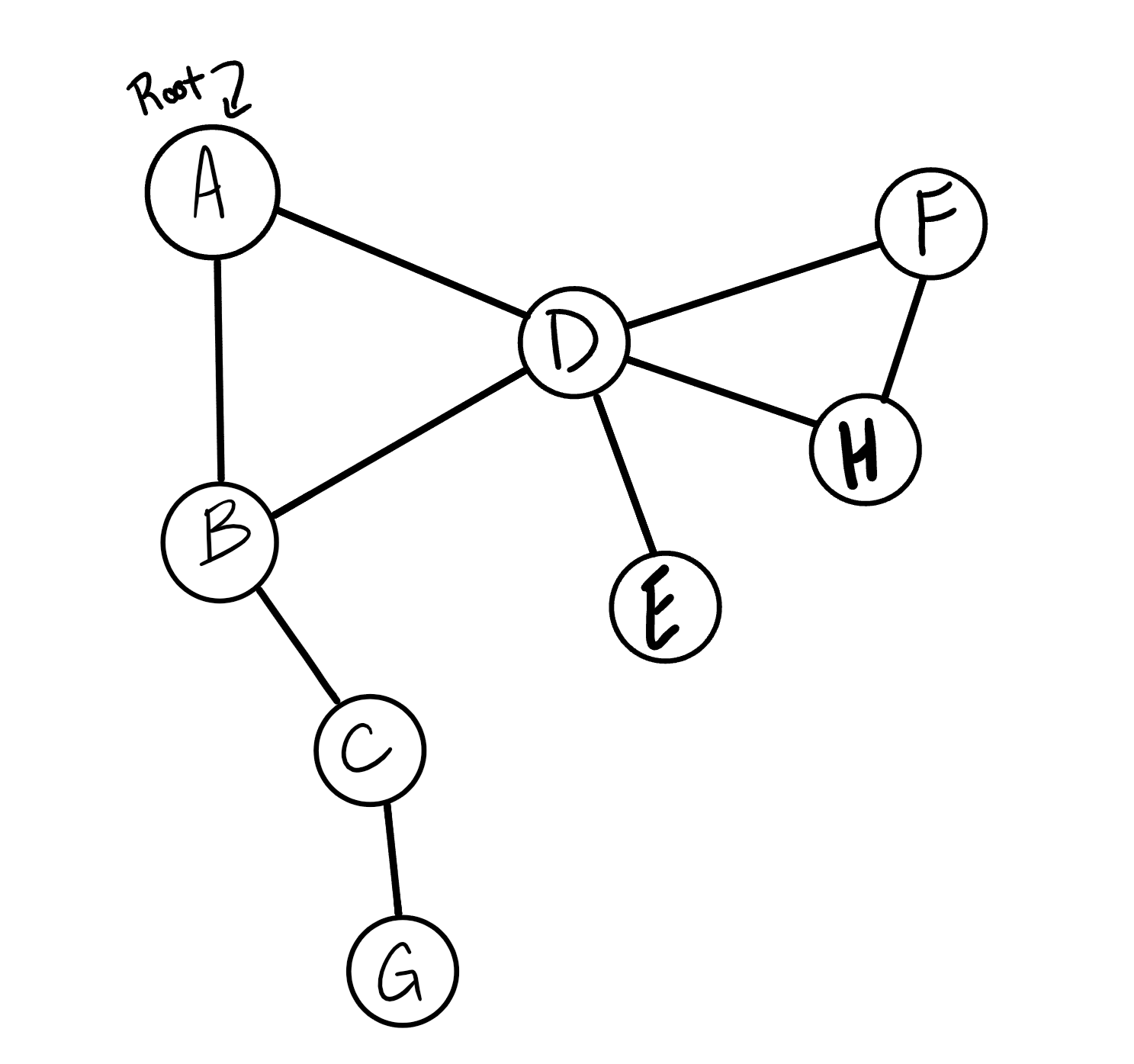
Breadth First
-
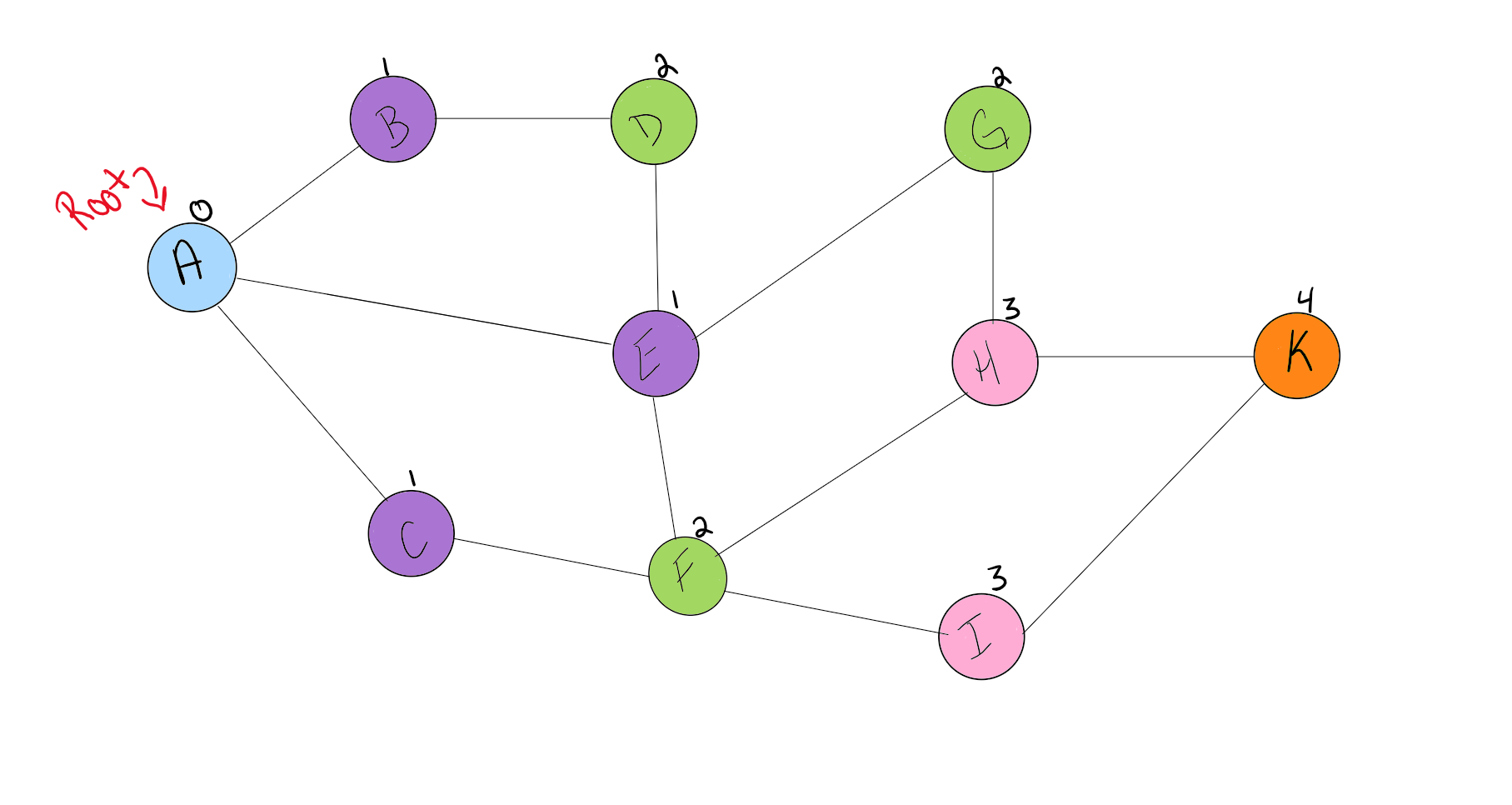
Here is what the algorithm breadth first traversal looks like:
- Enqueue the declared start node into the Queue.
- Create a loop that will run while the node still has nodes present.
- Dequeue the first node from the queue
- if the Dequeue‘d node has unvisited child nodes, add the unvisited children to visited set and insert them into the queue.
Depth First
-
The algorithm for a depth first traversal is as follows:
- Push the root node into the stack
- Start a while loop while the stack is not empty
- Peek at the top node in the stack
- If the top node has unvisited children, mark the top node as visited, and then Push any unvisited children back into the stack.
- If the top node does not have any unvisited children, Pop that node off the stack
- repeat until the stack is empty.

Real World Uses of Graphs
- GPS and Mapping
- Driving Directions
- Social Networks
- Airline Traffic
- Netflix uses graphs for suggestions of products