Spring RESTful Routing & Static Files
Spring RequestMapping
-
RequestMapping — by Path

-
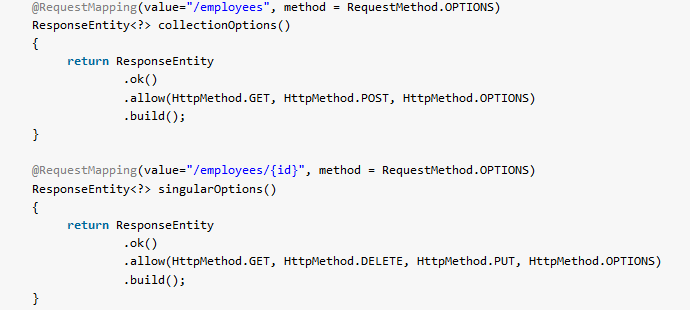
RequestMapping — the HTTP Method
-
RequestMapping With the headers Attribute
@RequestMapping(value = “/ex/foos”, headers = “key=val”, method = GET)
-
RequestMapping Consumes and Produces
@RequestMapping(value = “/ex/foos”, method = GET, headers = “Accept=application/json”)
-
RequestMapping With Path Variables

-
RequestMapping With Request Parameters

-
RequestMapping Corner Cases
-
RequestMapping — Multiple Paths Mapped to the Same Controller Method
@RequestMapping(value = { “/ex/advanced/bars”, “/ex/advanced/foos” }, method = GET)
-
RequestMapping — Multiple HTTP Request Methods to the Same Controller Method
@RequestMapping(value = “/ex/foos/multiple”, method = { RequestMethod.PUT, RequestMethod.POST }
-
RequestMapping — a Fallback for All Requests
@RequestMapping(value = “”, method = RequestMethod.GET
-
Ambiguous Mapping Error
-
-
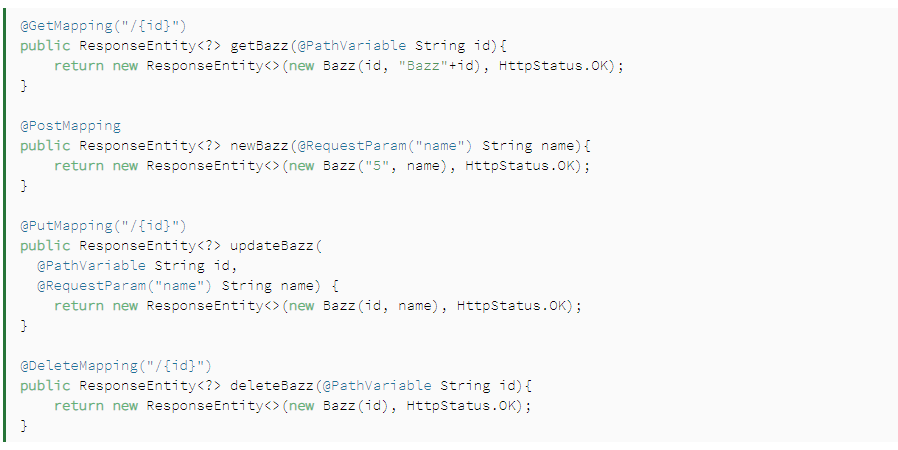
New Request Mapping Shortcuts
-
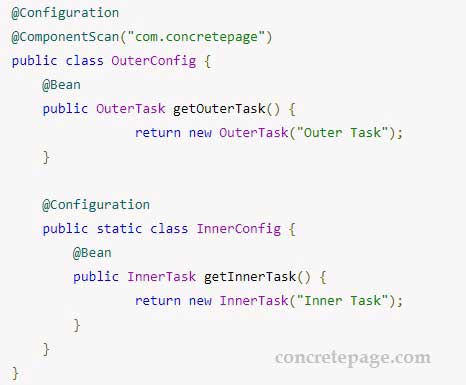
Spring Configuration

CrudRepository ,JpaRepository, and PagingAndSortingRepository in Spring Data
- CrudRepository :provides CRUD functions
- PagingAndSortingRepository provides methods to do pagination and sort records
- JpaRepository provides JPA related methods such as flushing the persistence context and delete records in a batch
#### typical CRUD functionality:
- save(…) – save an Iterable of entities. Here, we can pass multiple objects to save them in a batch
- findOne(…) – get a single entity based on passed primary key value
- findAll() – get an Iterable of all available entities in database
- count() – return the count of total entities in a table
- delete(…) – delete an entity based on the passed object
- exists(…) – verify if an entity exists based on the passed primary key value
#### JpaRepository methods :
- findAll() – get a List of all available entities in database
- findAll(…) – get a List of all available entities and sort them using the provided condition
- save(…) – save an Iterable of entities. Here, we can pass multiple objects to save them in a batch
- flush() – flush all pending task to the database
- saveAndFlush(…) – save the entity and flush changes immediately
- deleteInBatch(…) – delete an Iterable of entities. Here, we can pass multiple objects to delete them in a batch